Kimi’s Day Trip No.1 — Old Tokyo: Trams, Temples & Dagashi
Why Japanese grandmas plan better day trips than any travel app
Kimi, how many destinations did you include in this itinerary?
Yes.
…That is oddly logical. Continue.
Your Ticket🎟️
Tokyo Free Kippu(東京フリーきっぷ) — ¥1,720
Unlimited rides: JR EAST lines: non-reserved seats in ordinary cars of ordinary trains (including rapid trains) in the 23 wards of central Tokyo, Tokyo Metro, Toei Subway, Nippori-Toneri Liner, Tokyo Sakura Tram & Toei Bus
Available at JR East reserved ticket machines, Mobile Suica app, or any Tokyo Metro / Toei Subway station
Price and coverage as of June 2026. We recommend confirming details before your visit as routes and pricing may change.
🗾 The Route
1️⃣ Tokyo Station – start
🚃 Yamanote Line
🔻 12 min 🔻
Head to platform 3 and take the Yamanote Line toward Ueno. If you haven’t picked up your Tokyo Free Kippu yet, reserved ticket machines are available throughout the station near the main ticket gates.
2️⃣ Nippori Station
🚝 Toneri Liner
🔻 16 min 🔻
Dagashi (retro Japanese candy) at Oya Shoten — Nippori Station Garden Tower, 2nd floor. Opens 9:30am.
Then take the Toneri Liner from Nippori Station toward Nishiarai Daishi Nishi.
Nippori was once home to 160 dagashi wholesalers — wooden shopfronts lining the streets, selling cheap sweets to neighbourhood children across Tokyo. One by one, they closed. The buildings came down.
Oya Shoten is the last one standing.
It moved into a modern building inside Station Garden Tower. The wooden shopfronts are gone. But the dagashi — and the family behind the counter — are still there.
160 shops. Now one.
That’s worth 20 minutes of your morning.
3️⃣ Nishiarai Daishi Nishi Station
🚝 Toneri Liner
🔻8 min 🔻
(back to Kumanomae)
Walk 16 minutes to Nishiarai Daishi(西新井大師) — a temple founded in 826 AD. Try the famous kusa dango (mugwort rice cakes) from Shimizuya or Nakadaya, the two shops just outside the temple gate.
Take the Toneri Liner back toward Nippori and get off at Kumano-mae Station.
4️⃣ Kumano-mae Station — tram transfer
🚋 Sakura Tram
🔻12 min 🔻
Transfer to the Sakura Tram (Toden Arakawa Line). One of only two surviving tram lines in Tokyo. Transfer to the Sakura Tram (Toden Arakawa Line) toward Waseda. Get off at Kajiwara.
almost all were removed. Two lines survived: the Arakawa Line (now the Sakura Tram) and the Tokyu Setagaya Line. Both run through dense residential areas where subway replacement would have been too expensive. Today the Sakura Tram is treasured — nicknamed for the cherry trees along its route.
5️⃣ Kajiwara Station
🚋 Sakura Tram
🔻16 min🔻
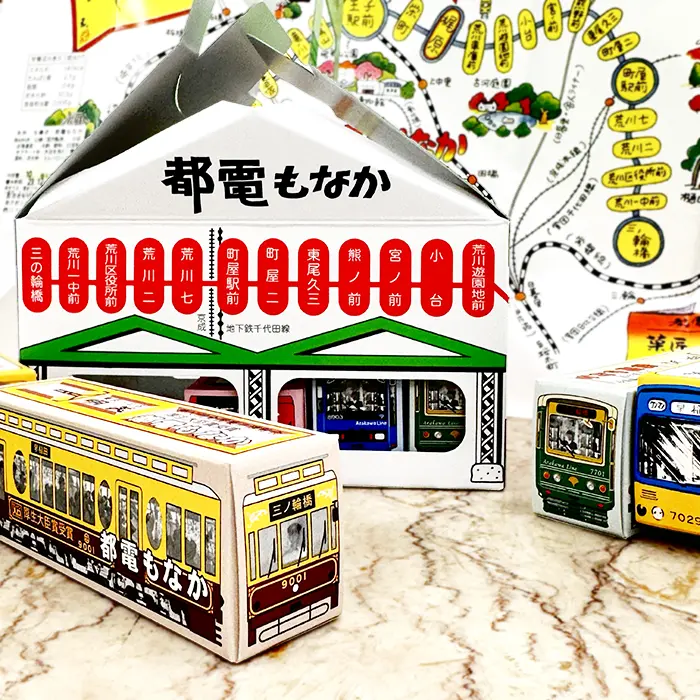
Tram-shaped monaka (sweet wafer cakes filled with red bean paste) at Akemi. The package looks exactly like the tram you just stepped off. It’s almost too good to eat — almost.
After picking up your monaka, board the tram again toward Minowabashi.
Monaka(最中) is a traditional Japanese sweet made of two thin wafers of baked glutinous rice, pressed together with sweet red bean paste (anko). Akemi’s tram-shaped monaka has been sold since the tram itself was running through the neighbourhood. Buying one is a small act of local preservation.
6️⃣ Machiya Ekimae Station
🚋 Sakura Tram
🔻7 min🔻
Lunch at Tendo — Edo-style tempura, a 1-minute walk from Machiya Ekimae stop. Afterwards, join the locals at Hakataya for obanyaki (大判焼き) — a round stuffed pancake filled with sweet red bean paste. A Machiya institution.
Take the Sakura Tram toward Minowabashi. Get off at Minowabashi.
Edo-style tempura emerged in the late Edo period as street food sold from outdoor stalls called yatai. Unlike Kansai-style tempura — which is light, pale, and delicate — Edo-style uses an oil blend that includes sesame oil, fried at high heat, producing a deep golden-brown colour and a distinctly rich, nutty flavour. The batter uses cold water and minimal mixing, creating an irregular, crunchy coating. It was fast food before fast food existed. The difference between the two styles tells you something about the two regions: Kansai refined, Edo bold.
7️⃣ Minowabashi Station
🚋 End of the line
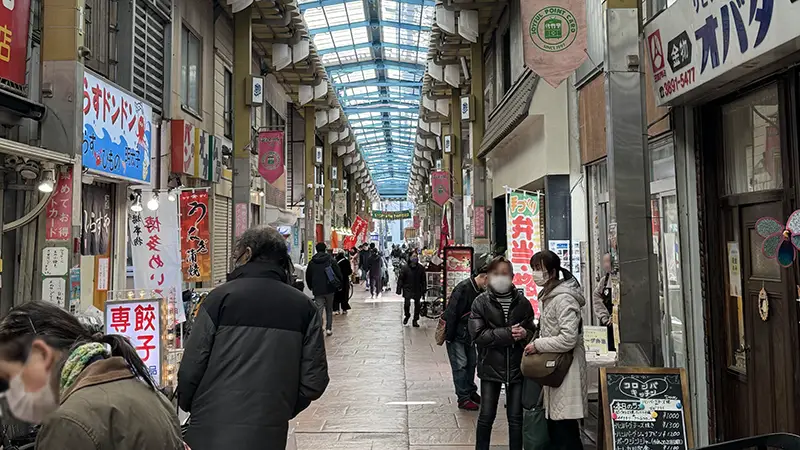
Last tram stop. Step off the tram and you’re almost already there — Joyful Minowa begins just steps from the platform, one of Tokyo’s last covered shopping arcades. Retro bakeries, sōzai (prepared side dishes) shops, and the unhurried pace of a neighbourhood that hasn’t chased trends.
Dinner: Sunaba — a soba restaurant inside the arcade with roots going back to the Edo period. Order the zaru soba. Take your time.
A shōtengai (商店街)is a covered or open-air shopping street that served as the commercial and social backbone of Japanese neighbourhoods for generations. At their peak in the 1960s, Japan had over 200,000 of them. The rise of supermarkets and convenience stores has steadily emptied many out. Joyful Minowa is one of the survivors, kept alive by an older local population that still prefers its butcher, its baker, and its tofu shop to a supermarket aisle.
Three different train lines, a 1,200-year-old temple, a Showa-era shopping arcade, and a soba shop from the Edo period. You planned this with a timetable.
It’s called a timetable.
…I cannot argue with that logic.
The day isn’t over.
You may think the day is over. But Tokyo rarely ends where you expect. Kimi’s itinerary doesn’t either.
The full itinerary continues with:
🌳 Kiyosumi Garden
⛩️ Tsukiji Outer Market, Nami-yoke Shrine
🗼 Tokyo Tower at dusk
✨ Ginza & Tokyo Station illuminated at night
Plus: complete timetables, all transit connections, Jiji’s full investigations, and a printable map.